How to Turn Event Photos Into Marketing Gold: The Hidden Revenue Engine Nobody's Talking About
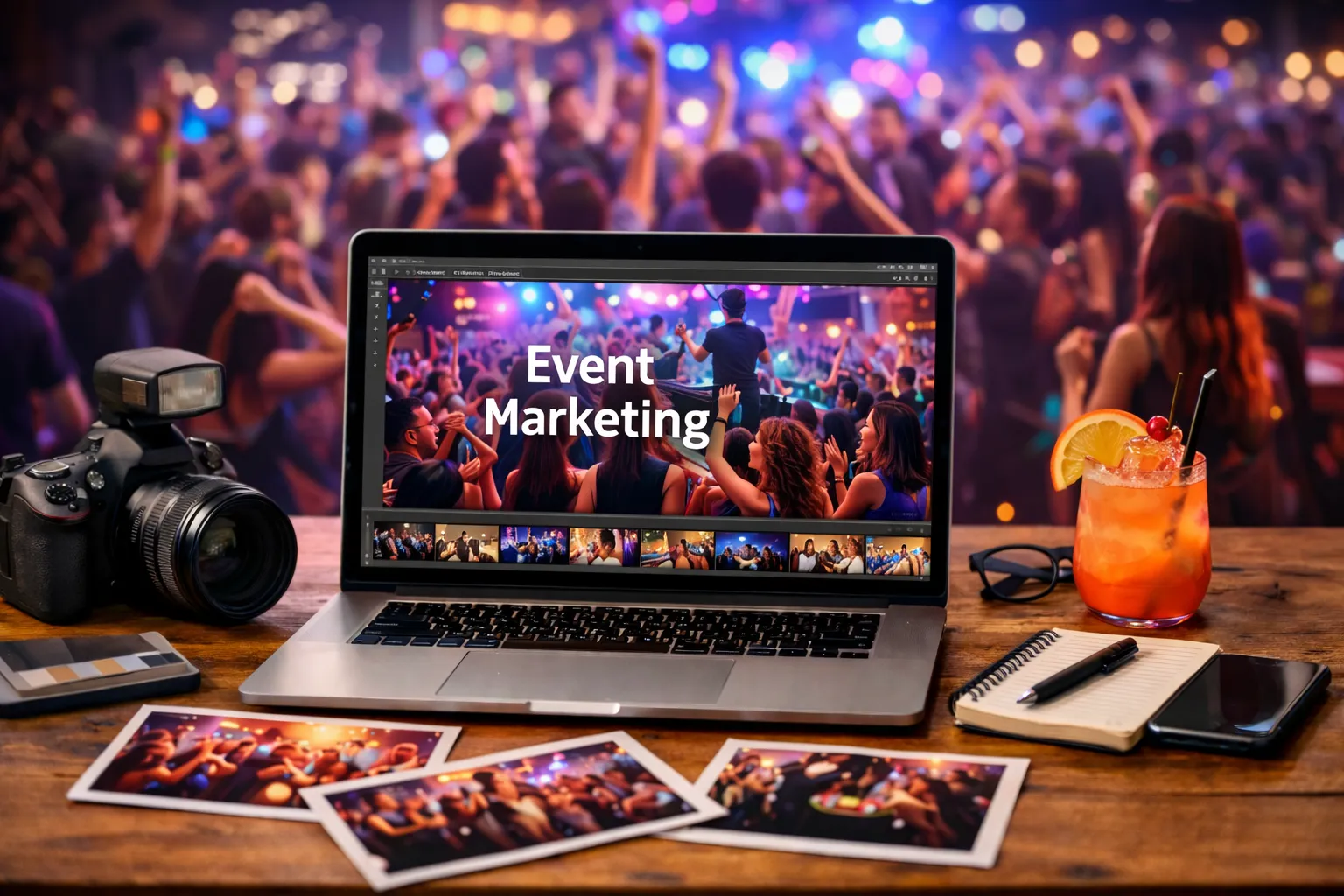
Here's a question that's going to make you rethink everything about event photography: What if I told you the photos from your last event are worth more than what you charged to shoot them?
Not because you should have charged more. But because those photos are sitting on a goldmine of marketing data that 99% of event professionals are completely ignoring.
Let me paint a picture. You photographed a wedding last month. 150 guests. Beautiful venue. Gorgeous shots. You delivered the photos, got paid, moved on to the next gig. Standard operating procedure.
But here's what you didn't capture: 150 engaged, interested people who voluntarily raised their hands and said 'I care about weddings.' Every single one of those guests who clicked to view photos is a qualified lead for your next booking. And if you're not tracking them, building audiences from them, and marketing to them, you're leaving money on the table.
A lot of money.
This isn't theory. This is how modern brands, nightclubs, and savvy photographers are turning event photos into recurring revenue streams. And once you understand the mechanics, you'll wonder how you ever operated without it.
The Marketing Data Sitting in Your Event Photos (That You're Throwing Away)
Before we dive into the how, let's talk about the what. What exactly is this 'marketing gold' I'm referring to?
When someone engages with your event photos, they're doing more than just looking at pictures. They're generating behavioral data. They're telling you who they are, what they care about, and most importantly, that they're part of a specific demographic worth targeting.
Think about a wedding guest who uploads a selfie to find their photos. In that single action, they've revealed: They attended a wedding (probably age 25 to 45, statistically likely to get married or know someone getting married soon) They care enough about photos to actively seek them out (higher engagement personality type) They're comfortable with technology (they successfully used your photo platform) They're in your geographic service area (they attended a local event) They're already familiar with your brand (they've seen your work)
That's not just data. That's a warm lead. And you just captured it.
Now multiply that by 150 wedding guests. Or 300 corporate event attendees. Or 800 people who came to a nightclub on Saturday. Suddenly you're not just a photographer who shoots events. You're sitting on a database of thousands of qualified, engaged potential customers.
The question is: what do you do with it?
Understanding the Magic: What Lookalike Audiences Actually Are (And Why They're Insanely Powerful)
Okay, let's get into the mechanics. If you've ever run Facebook or Instagram ads, you've probably heard the term 'lookalike audience.' But most people don't actually understand what's happening under the hood, and why this technology is absolute wizardry for event marketing.
Here's the basic concept: You give Facebook a list of people (your 'source audience'). Facebook analyzes thousands of data points about those people: their age, location, interests, behaviors, purchase patterns, pages they follow, content they engage with, devices they use, and about a million other signals.
Then Facebook goes out and finds other people who look remarkably similar to your source audience. Not just demographically similar. Behaviorally similar. People who act like your best customers, even if they've never heard of you.
The result? You can show your ads to people who are statistically likely to convert, even though you've never interacted with them before.
Why This Matters for Event Photography
Let's say you're a wedding photographer. You just shot a beautiful wedding in Austin, Texas. 150 guests engaged with your photo platform to get their personalized galleries.
You install a Meta Pixel (a tiny piece of tracking code) on your photo delivery platform. Now Facebook knows exactly who those 150 people are. You create a lookalike audience from those 150 engaged wedding guests.
Facebook goes out and finds 50,000 people in Austin who look exactly like those engaged wedding guests. Same age range. Same relationship status. Same interest in weddings and photography. Same likelihood to book a photographer in the next 12 months.
Now you can run ads targeting those 50,000 people for a fraction of what it would cost to advertise to everyone in Austin aged 25 to 45. Your ad spend goes further. Your conversion rates skyrocket. Your cost per booking drops dramatically.
This is the difference between throwing money at random people hoping someone bites, versus laser targeting people who are already predisposed to want exactly what you're selling.
Retargeting: Following Your Warm Leads Until They Convert
Lookalike audiences are powerful for finding new customers. But retargeting? That's for converting the people who already know you exist.
Retargeting (also called remarketing) is beautifully simple: you show ads to people who've already interacted with your brand. Someone visited your website? Show them an ad. Someone engaged with your event photos? Show them an ad. Someone clicked your Instagram profile? Show them an ad.
The psychology here is crucial. Marketing research shows that people need to see a brand 7 to 13 times before they make a purchase decision. One interaction isn't enough. They need repeated exposure, multiple touchpoints, ongoing reminders that you exist.
This is where event photos become marketing gold. Every guest who engages with your photos has already had that first touchpoint. They've already shown interest. They're warm leads, not cold prospects.
Now you can follow them around the internet (in a totally legal, privacy compliant way) with targeted ads until they book you, refer you, or convert into customers.
The Real World Impact: Numbers That Matter
Let me give you some context on why retargeting is so absurdly effective compared to cold advertising.
Average cold Facebook ad conversion rate: 2% to 3%
Average retargeting ad conversion rate: 10% to 15%
That's not a marginal improvement. That's a 5x multiplier on your marketing effectiveness. Same budget, five times the results. Just by targeting people who already know who you are.
Cost per click on cold ads: $1.50 to $3.00
Cost per click on retargeting ads: $0.40 to $0.80
You're paying less and getting better results. This is the holy grail of digital marketing.
How Nightclubs Are Building Recurring Revenue From Photo Engagement
Let's talk about nightclubs specifically, because this is where event photo marketing gets really interesting.
Most nightclubs operate on a week to week model. Friday and Saturday are money nights. The challenge? Getting people to come back consistently. Building a loyal customer base instead of random foot traffic.
Traditional nightclub marketing looks like this: post on Instagram, hope people see it, maybe run some generic ads targeting 'people aged 21 to 30 who like nightlife' in your city. It's expensive, inefficient, and you're competing with every other venue doing the exact same thing.
Smart nightclubs are taking a completely different approach. They're using event photos as the foundation of a retargeting funnel.
The Nightclub Photo Retargeting Playbook
Here's how it works in practice:
Friday night: The venue hires a photographer (or uses staff) to capture 200 to 300 photos throughout the night. Great energy shots, people dancing, groups having fun, bottle service moments.
Saturday morning: Photos get uploaded to a personalized photo delivery platform with Meta Pixel tracking installed. The venue posts on Instagram: 'Want to see your photos from last night? Click the link in bio and upload a selfie.'
Over the next 48 hours: 400 people click the link and engage with the photo platform to find themselves. Meta Pixel captures every single one of them.
Monday through Thursday: The venue runs retargeting ads to those 400 engaged people. 'Had fun Friday? This Saturday we've got a special guest DJ. Reserve your table now.' Those 400 people see the ad repeatedly across Facebook, Instagram, and Messenger.
Friday: 30% of those retargeted people come back to the club. That's 120 confirmed returning customers from one week of photo engagement. Most of them bring friends. Your attendance jumps, your revenue increases, and it cost you maybe $200 in ad spend.
But here's where it gets really powerful.
Building a Lookalike Audience From Your Best Customers
After a few months of this strategy, you've built a database of 5,000+ people who regularly engage with your event photos. These aren't random Instagram followers. These are people who physically showed up to your venue, had a good time, and actively sought out photos afterward.
These are your ideal customers. The people who actually spend money at your club.
Now you create a lookalike audience from those 5,000 engaged customers. Facebook finds 50,000 people in your city who behave exactly like your best customers. Same age, same interests, same nightlife behaviors, same spending patterns.
You run acquisition ads to that lookalike audience. Your messaging: 'Austin's hottest Friday night. See photos from last week.' You're not selling to random 21 year olds. You're selling to people who are statistically likely to love your venue because they match your existing customer base.
The result? Your customer acquisition cost drops by 60%. Your return on ad spend triples. Your venue is packed every weekend because you're marketing to the right people instead of everyone.
This is how nightclubs go from hoping people show up to engineering predictable, recurring attendance.
How Wedding Photographers Turn Guest Engagement Into Future Bookings
Nightclubs have recurring events. But what about wedding photographers who shoot one time events? How does photo engagement marketing work when your customers are different every single time?
Here's the insight that changes everything: wedding guests are your next clients.
Think about who attends weddings. Friends and family of the couple, right? And what demographic are those people? Typically ages 25 to 40. Which means they're either: recently married, currently engaged, getting engaged soon, or close friends with people getting engaged.
Every wedding you shoot exposes your work to 100 to 200 people in your exact target market. These people have just experienced your photography firsthand. They've seen your professionalism, your shot composition, your ability to capture moments.
And if you're smart, you've captured their data when they engaged with your photos.
The Wedding Photography Retargeting Strategy
Let's walk through this step by step.
You shoot a wedding in Dallas. 150 guests. Your photo delivery platform has Meta Pixel installed. Within a week, 120 guests upload selfies to get their personalized galleries.
Meta Pixel captures all 120 people. You now have 120 warm leads who've already experienced your work and associate you with a positive, emotional experience (their friend's beautiful wedding).
You create a retargeting campaign specifically for those 120 people. Your messaging: 'Loved the photos from [Couple's Names] wedding? When you're ready to book your own photographer, we'd love to capture your day.' You run this ad for six months.
Over the next year, three things happen. First, two of those guests book you directly because they saw your retargeting ads when they got engaged. That's an extra $8,000 in revenue from a $50 ad spend.
Second, five guests refer you to friends who are getting married. Those referrals are warm introductions, not cold inquiries. They close at 80% instead of 30%. That's another $20,000 in bookings.
Third, you create a lookalike audience from all the engaged wedding guests from your last 12 weddings. That's 1,500 people who've interacted with your brand. Facebook finds 40,000 people in Dallas who match that profile.
You run acquisition ads to that lookalike audience targeting people whose relationship status recently changed to engaged. Your cost per booking drops from $400 to $150 because you're targeting qualified leads instead of the entire market.
This is how wedding photographers go from hustling for every single client to building a reliable marketing engine that generates inbound leads consistently.
Why Photo Engagement Data Is Cheaper Than Traditional Lead Generation
Let's talk about money. Specifically, why building audiences from photo engagement is dramatically cheaper than traditional marketing approaches.
Traditional event marketing spend breaks down like this. You pay for ads to get people to notice you. You pay for landing pages. You pay for email marketing software. You pay for CRM systems. You pay for lead magnets and content creation. You're constantly spending money to capture attention.
Photo engagement flips this model on its head. Your leads are self identifying. They're raising their hands voluntarily. And the data capture happens automatically as a byproduct of delivering value (giving people their photos).
Let me break down the cost comparison.
Traditional Lead Generation
Facebook ads to cold audience: $2,000 ad spend to generate 100 leads. That's $20 per lead.
Email marketing campaign: $500/month for software, plus $1,000 in content creation. Maybe 5% conversion rate on your list.
Google Ads: $5 to $15 per click for competitive keywords like 'wedding photographer Dallas.' Maybe 2% conversion from click to inquiry.
Total cost to acquire one customer: $500 to $1,200 depending on your industry.
Photo Engagement Lead Generation
Photo delivery platform: $50/month subscription or pay per event.
Meta Pixel installation: Free. One time setup.
Retargeting ads to engaged users: $100 ad spend reaches your entire warm audience for a month.
Lookalike audience creation: Free. Facebook does this automatically.
Total cost to acquire one customer: $80 to $200.
You're looking at a 3x to 10x reduction in customer acquisition cost. Same revenue, dramatically lower marketing spend. The difference goes straight to your bottom line.
The Compounding Effect: Why This Gets More Powerful Over Time
Here's what makes photo engagement marketing truly special. It compounds.
Every event you shoot adds more people to your retargeting audiences. Every month, your lookalike audiences get better because Facebook has more data to work with. Every campaign you run teaches the algorithm more about what your best customers look like.
After six months, you might have 3,000 engaged users in your retargeting pool. After a year, maybe 8,000. After two years, you've built a proprietary audience of 20,000+ people who've interacted with your brand.
That's not just a mailing list. That's a living, breathing database that you can activate anytime you want to fill your calendar. Launch a new service? Boom, show it to 20,000 qualified people. Running a special promotion? Boom, instant audience. Want to test new messaging? You've got thousands of people to experiment with.
Most businesses spend years and millions of dollars trying to build audiences of this size and quality. You're building it automatically by doing what you already do: delivering event photos to guests.
How to Build a Retargeting Funnel from Nightclub Photos: The Complete Blueprint
Alright, let's get tactical. If you're a nightclub owner or promoter, here's exactly how to implement this strategy from scratch.
Step 1: Install Meta Pixel on Your Photo Platform
This is non negotiable. Meta Pixel is a small piece of code that tracks visitor behavior on your website or web app. When someone visits your photo delivery page, uploads a selfie, views their gallery, or downloads photos, the Pixel captures that event.
Most modern photo delivery platforms support Meta Pixel integration. You'll get a Pixel ID from Facebook Business Manager and paste it into your platform settings. Takes five minutes.
Pro tip: Set up custom events to track specific actions. Track when someone uploads a selfie (high engagement signal), views more than three photos (very engaged), or downloads images (super engaged). These event tiers let you create audience segments based on engagement level.
Step 2: Create Your Weekly Photo Capture Routine
Friday and Saturday nights, designate someone to shoot 200 to 400 photos. This doesn't need to be a professional photographer. Staff members with decent phone cameras work fine. Focus on energy shots: people dancing, groups toasting, big smiles, bottle service presentations.
Sunday morning, upload all photos to your photo delivery platform. Create the event with your venue branding, social links, and contact info.
Sunday afternoon, post the link on Instagram, Facebook, and TikTok. 'Want to see your photos from this weekend? Upload a selfie at [link].' Pin it to your profile. Post it in your stories. Send it in your WhatsApp group if you have one.
Step 3: Build Your Retargeting Audience
In Facebook Business Manager, create a custom audience from your Meta Pixel data. Include anyone who visited your photo page in the last seven days. This is your 'Recent Photo Engagers' audience.
As weeks go by, create additional audiences. 'Photo Engagers Last 30 Days' captures everyone from the last month. 'Super Engaged Photo Viewers' includes only people who viewed 5+ photos or downloaded images.
These audiences become your targeting options for different campaign types.
Step 4: Launch Your Retargeting Campaigns
Monday through Thursday, run ads to your 'Recent Photo Engagers' promoting the upcoming weekend.
Your ad creative should reference the previous weekend. Use actual photos from the event. 'Had fun last Friday? This weekend is going to be even better. Special guest DJ [Name]. Reserve your table now.'
Keep the budget modest. $20 to $50 per day is enough to reach your retargeting audience multiple times. You're not trying to reach the whole city. You're following up with people who already showed interest.
Test different ad formats: carousel ads showing multiple photos from last week, video compilations set to music, static images with compelling copy.
Step 5: Build and Target Lookalike Audiences
After you've accumulated 1,000+ people in your photo engagement audience (usually takes 4 to 8 weeks), create a lookalike audience.
In Facebook Business Manager, select your 'Photo Engagers' custom audience as the source. Choose your location (your city plus surrounding areas). Select 1% similarity for your first lookalike (this gives you the highest quality matches).
Facebook will generate an audience of people who closely resemble your engaged guests. This becomes your cold acquisition audience.
Run acquisition ads to this lookalike audience with messaging focused on attracting new customers. 'Austin's best Friday night experience. See why everyone's talking about [Venue Name].' Include social proof: photos of crowds, testimonials, user generated content.
Step 6: Measure and Optimize
Track these metrics weekly: number of people who engaged with photos, retargeting ad reach, click through rate, cost per click, estimated return visits (track with loyalty programs or cover charge codes), revenue attribution.
Compare your retargeting campaign performance to your cold ad performance. You should see 3x to 5x better engagement rates on retargeting.
Optimize based on data. If carousel ads outperform static images, use more carousels. If Thursday ads get better response than Monday ads, shift budget to Thursday. If 'Super Engaged Photo Viewers' convert at higher rates, allocate more spend to that audience segment.
Why Event Marketers and Agencies Need to Pay Attention
If you're a brand marketer or run a marketing agency, photo engagement data should be part of every event strategy you create. Here's why.
Corporate events are expensive. Product launches, conferences, trade shows, brand activations. Companies spend $50,000 to $500,000+ on single events. But when the event ends, the investment stops paying dividends.
Or does it?
Smart marketers are extending event ROI by capturing photo engagement data and building long term audience assets.
Let's say you're running a product launch event for a new tech gadget. 500 attendees. Industry press, influencers, potential customers. You photograph the event and use personalized photo delivery with pixel tracking.
350 attendees engage with the photos. Now you have 350 people who are interested enough in your product to voluntarily interact with your brand twice: once by attending, once by seeking photos.
You retarget those 350 people for the next six months with product updates, special offers, customer testimonials. Your conversion rate from event attendee to customer jumps from 5% to 25% because you're staying top of mind.
You create a lookalike audience from those engaged attendees. You target that audience with acquisition ads for your product. Your cost per acquisition drops by 40% because you're reaching people similar to those who already showed interest.
One event doesn't just generate immediate buzz. It becomes the foundation of your customer acquisition engine for months afterward.
The Privacy Compliant Way to Do This
Before anyone gets nervous about privacy, let's address the elephant in the room.
Everything I've described is completely legal and privacy compliant when done correctly. Meta Pixel tracking is standard marketing practice. Retargeting is how the entire digital advertising industry operates. Lookalike audiences are a core Facebook product.
The key is transparency and consent.
Your photo platform should have clear privacy policies explaining that you use cookies and tracking pixels for marketing purposes. Users should be able to opt out if they choose. You should comply with GDPR, CCPA, and other relevant regulations.
Most importantly, you should never sell or share personal data with third parties. The data stays between you, your platform, and Meta's advertising system. It's used solely for showing relevant ads to interested people.
When positioned correctly, guests appreciate this approach. They're seeing ads for events they actually care about instead of random irrelevant content. It's targeted marketing done right.
The Platforms That Make This Possible
To implement everything I've described, you need a photo delivery platform that supports marketing integrations.
Look for platforms that offer: built in Meta Pixel integration (you shouldn't need technical knowledge to set this up), Google Tag Manager support (for more advanced tracking), email capture with consent (to build mailing lists), analytics dashboards showing engagement metrics, custom event tracking for different actions, and export capabilities for custom audience creation.
Platforms like Selfish are specifically designed for this use case. You get personalized photo delivery for guests plus marketing tools for building audiences and tracking engagement. Everything connects seamlessly to Meta Business Manager, Google Analytics, and major email marketing platforms.
The technical implementation should be invisible to you. Upload photos, share link, audiences build automatically. That's the standard you should expect.
What This Looks Like Six Months from Now
Let's fast forward. You've been implementing photo engagement marketing for six months. What's different?
Your retargeting audiences now include 5,000+ engaged people across dozens of events. You're no longer scrambling for customers. You have a reliable pipeline of warm leads you can activate anytime.
Your marketing costs have dropped by 50% because you're targeting qualified audiences instead of cold prospects. Your conversion rates have tripled. Your revenue per event has increased because you're extracting ongoing value instead of one time payments.
You've built lookalike audiences that perform better than any targeting you've ever used. Facebook's algorithm has learned exactly what your best customers look like. Your ads are showing to people who are statistically likely to convert.
Competitors are still posting random content hoping someone notices. You're running a systematic marketing engine that turns every event into a lead generation machine.
That's not hype. That's what happens when you treat event photos as marketing assets instead of just deliverables.
Why Most People Won't Do This (And Why You Should)
Here's the honest truth. Most event photographers, nightclub owners, and brand marketers won't implement any of this. They'll read this article, think 'that's interesting,' and go back to business as usual.
Why? Because it requires changing how they think about event photos. It requires learning new tools. It requires investing a bit of time upfront to set up tracking and audiences.
But for the people who actually implement this, the competitive advantage is massive.
You'll be marketing smarter while everyone else is marketing harder. You'll be building audiences while competitors are renting them from Facebook. You'll be creating compounding growth while others are stuck on the revenue treadmill.
The opportunity is sitting right in front of you. Those event photos you're already taking? They're worth more than you're charging. The guests who are already engaging with your content? They're warm leads waiting to be nurtured.
The only question is whether you're going to recognize the opportunity and act on it, or whether you're going to keep leaving money on the table.
Getting Started: Your First Campaign
If you're ready to turn your event photos into marketing gold, start simple.
Pick one upcoming event. Set up a photo delivery platform with Meta Pixel tracking. After the event, upload photos and share the link. Watch how many people engage.
In Facebook Business Manager, create a custom audience from those engaged users. Run a simple retargeting ad with a special offer or upcoming event promotion. Budget $50. See what happens.
You'll probably see 10x better engagement than your typical cold ads. You'll get clicks from people who actually remember your brand. You'll start to understand the power of warm audiences.
Then do it again. And again. Build the habit. Let your audiences compound. Watch your marketing costs drop and your revenue increase.
This isn't complicated. It's just different. And different is exactly what separates businesses that grow from businesses that stagnate.
Your event photos are already marketing gold. You just need to start mining them.